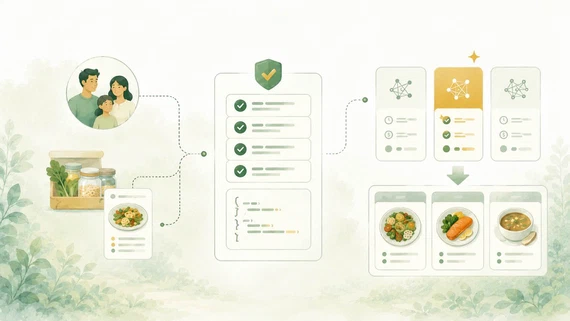
Notes from a meal-planning AI model shootout
Two AI models produced the same passing meal plan for the same test households. One model cost 30x less than the other, …


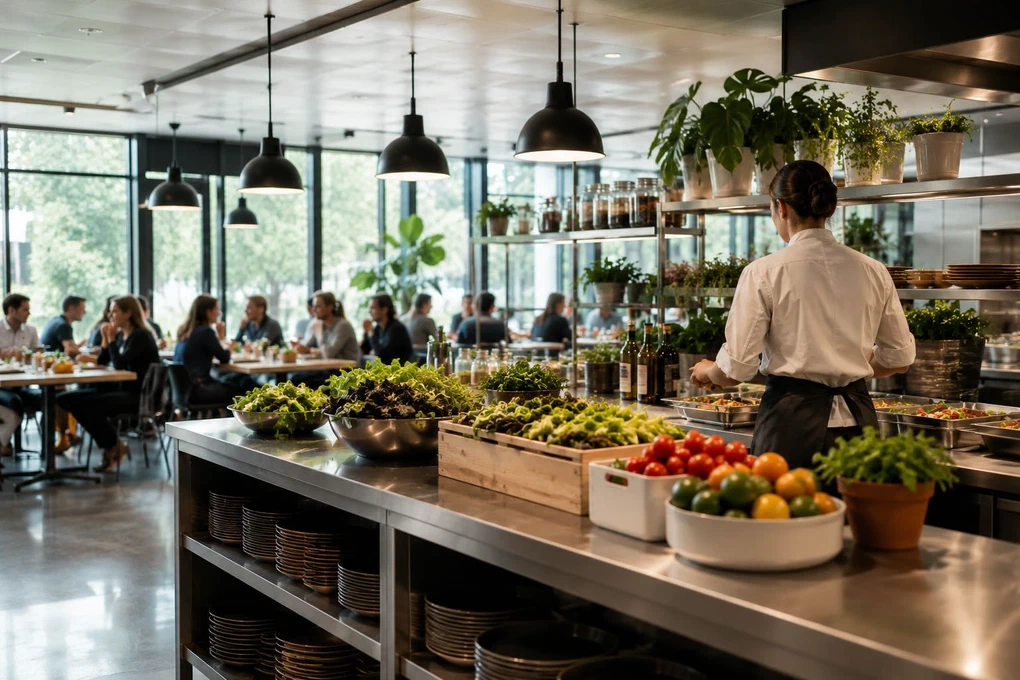
Field Notes is an ongoing series documenting what we're learning as we explore complex operations. Rather than presenting finished answers, these notes capture observations, emerging hypotheses and the questions we're taking into the next conversation.
Many technology projects start with a solution.
A new application. An AI model. A dashboard. A workflow.
We're trying something different.
One of our own products, Madklar, started with a simple observation from our own family: meal planning is rarely about culinary ambition. It’s about making the week work.
Who is home? What do people like? What needs using? What can fit in our budget? What can realistically be cooked on Tuesday? As we explored those questions for households, we found ourselves drawn to the professional version of the same challenge.
This summer we're spending our time talking with chefs, municipalities, suppliers, researchers and food technology companies. Not because we already know what to build, but because we want to understand how great food operations actually work.
Institutional food may seem like an unusual place to begin. To us, it isn't.
The scale is different, but the nature of the work is remarkably familiar. Every day, professional kitchens balance people’s preferences, nutrition, sustainability, procurement, budgeting, logistics, staffing and changing demand. Few environments make operational decision-making more visible.
If we want to build technology that genuinely helps, we believe we need to understand those decisions first.
Instead, we learned about organizational design.
One recent conversation with the leader of a large hospitality operation challenged several assumptions we had brought into the room.
We expected to hear a lot about software.
We ended up talking about ownership.
Their planning isn't driven by a central planning department. Instead, each kitchen area owns its own planning, budget and operational decisions. The team collaborates to create a coherent daily menu, rotating responsibility for consolidating procurement so that knowledge spreads naturally across the organization.
Technology certainly plays a role, but it's only a supporting character in their story.
"You need flexibility in order to get creativity."
That sentence has stayed with us.
The best operations create the conditions for people to make better decisions.
Food waste is a good example.
The operation measures waste carefully. Because it creates the feedback needed to improve tomorrow's menu, tomorrow's portions and tomorrow's planning.
The technology provides visibility.
People create improvement.
That distinction feels increasingly important as AI becomes part of more workplaces.
We’re starting to believe that most operational challenges are learning problems.
How do teams:
These are the questions we're taking into every conversation.
Some of our hypotheses will turn out to be wrong, and that's exactly the point.
At Nornilo, we believe good technology starts with understanding the work.
Before writing software, we want to understand the systems, incentives, trade-offs and everyday decisions that shape great operations.
Institutional food is simply the first chapter of that exploration.
We're documenting what we're learning as we go.
If you work with institutional kitchens, food service, municipalities, suppliers, research or food technology, we'd love to hear your perspective.
You can follow our ongoing exploration here:
Two AI models produced the same passing meal plan for the same test households. One model cost 30x less than the other, …
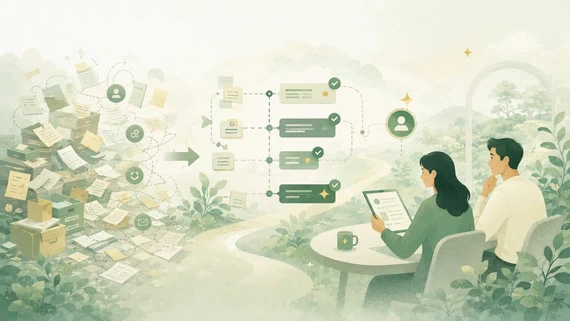
There's a common sequence of events in growing businesses: the team gets busy, someone can't keep up, so you hire …
Start with a conversation. We'll help you figure out if there's something worth shaping, building, or simplifying - and tell you honestly when there isn't.
Book a conversation