Pitch preparation time cut from hours of manual digging to minutes. Every inbound request met with a briefing already assembled before anyone picks up the conversation.
The problem
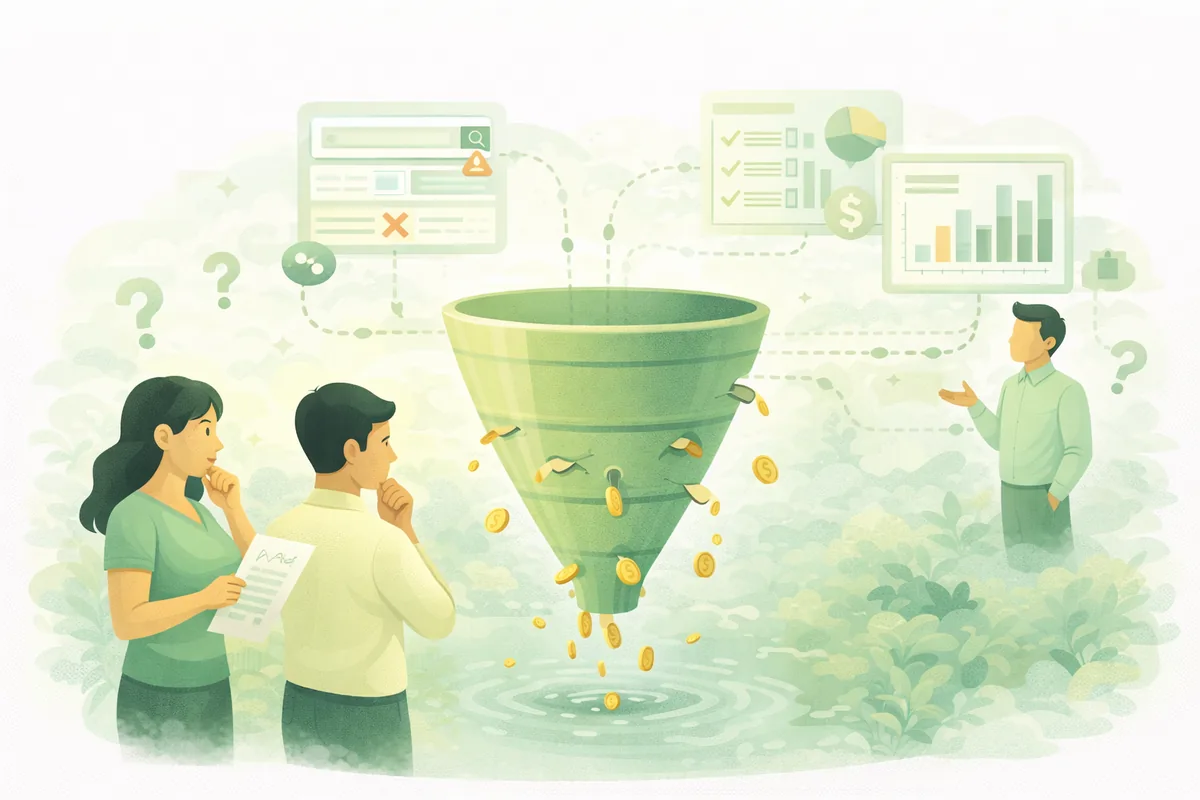
When someone fills in a contact form or books a meeting, you know very little about them. A name, a company, maybe a line about what they're looking for. The research that would make the first conversation substantive - who they are, what they do, where the likely pain is, which angle is relevant - still needs to happen, and it happens manually, right before the call, if it happens at all.
For a consultancy or advisory business, that first conversation is the pitch. Arriving unprepared doesn't just waste time - it signals exactly the opposite of what you're trying to demonstrate.
How we built this
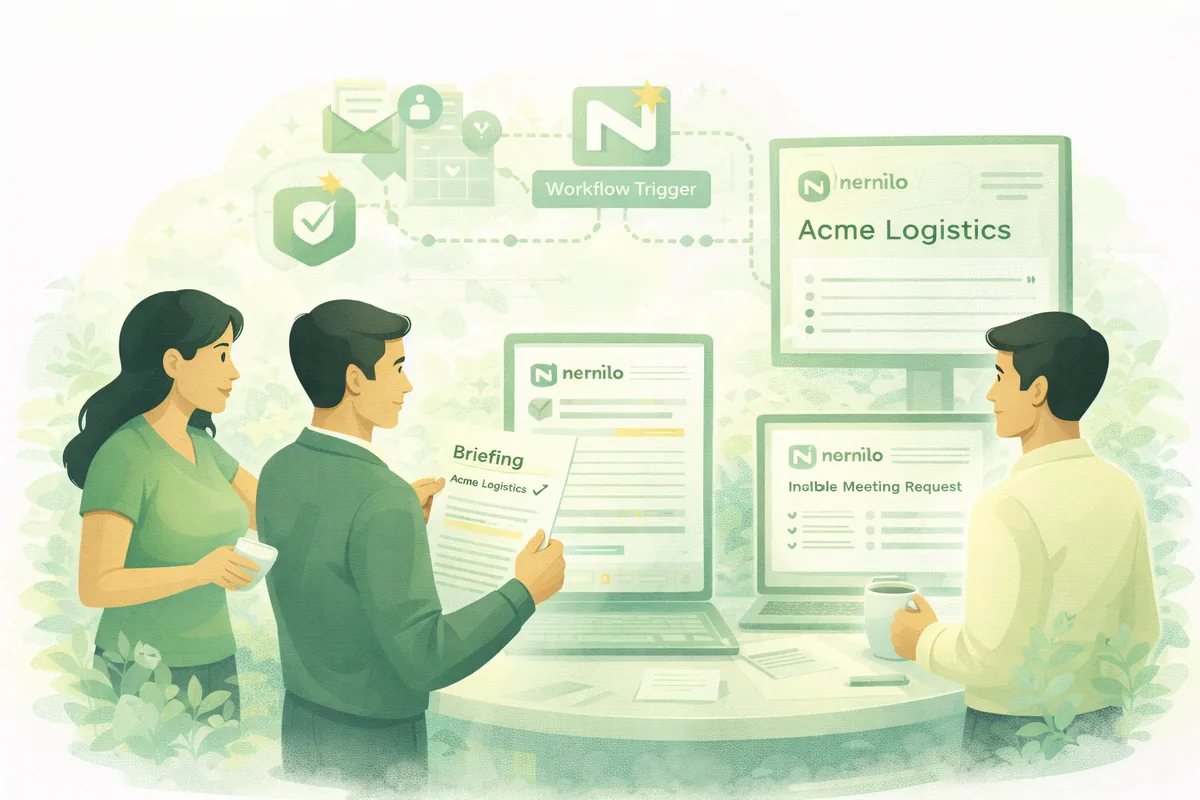
At Nornilo, this is the system we use for every inbound contact - the same kind of automation we build for clients, running on our own front door. When a request comes in through the contact form, an automated workflow triggers before anyone reads it.
The first step is pseudonymisation: personal identifiers - name, email, phone number - are replaced with placeholders before the request reaches the research step, so that step operates on company and context information only, not on the individual. The original details are retained separately, visible only to the person handling the follow-up. This matters both for GDPR compliance and for keeping the research focused on what's actually useful.
From there, the workflow identifies the company - from the domain, the organisation name, or both - and runs an automated research pass using publicly available information: what the company does, the industry context, their likely operational profile, any signals about where automation or workflow problems might exist. That output is cross-referenced against Nornilo's capabilities and value proposition to identify the most relevant angles to pursue.
The result lands in our inbox as a structured briefing: a few paragraphs covering the company background, the nature of the request, the likely opportunity, and the angles worth exploring in the first conversation. Every claim in it traces back to a real source - a company page, a news mention, an industry signal - not a plausible-sounding guess, and every one of those sources is reviewable, one click away, before anyone relies on it. Where the research doesn't turn up enough to say something with confidence, the briefing says so, rather than inventing detail to fill the gap. By the time someone sits down to prepare for the call, the groundwork is already done - and it's groundwork you can actually check.
What this looks like in practice
The same pattern applies to any business where inbound contacts deserve a prepared, personalised response - professional services, advisory, consulting, complex B2B sales. The specifics vary: the research sources, the cross-referencing logic, the format of the output. What stays consistent is the principle - the first conversation should start with a point of view, not a blank slate.
A typical build involves a form or calendar trigger, a pseudonymisation step, a research workflow (a custom pipeline with LLM integration for the analysis and synthesis layer; if the company already has automation tools in place, we can build on those too), and a delivery step that puts the briefing somewhere useful before the conversation happens. The whole workflow runs in minutes.