When the approved process is more painful than the workaround, people bypass it - and the business pays the price. Effort per case down 80%, with every decision captured as structured data.

The problem
When a process is painful, people don't follow it. They route around it.
In B2B businesses where contracts govern access to scarce capacity, privileged pricing, or service levels, there are moments when a customer needs more than their current agreement covers.
The right channel is a formal upgrade - a separate, typically higher-priced contract that reflects current conditions.
But if getting that upgrade approved requires navigating an ungoverned mix of emails, spreadsheets, and chased approvals, people are more likely to follow the path of least resistance. They might grant the extra capacity informally under the existing contract terms.
That's a process failure with direct commercial consequences. The upgrade exists precisely because current conditions justify a different price. Bypassing it doesn't just create administrative noise - it leaves money on the table, every time.
The root cause is almost always the same: the approved process is slower and more painful to follow than the workaround, so it loses.
How we approached this
A global logistics company operated a contract upgrade product for B2B customers - a mechanism to access additional transportation capacity at terms reflecting current market conditions. The process for requesting and approving these upgrades was manual: salespeople initiated requests by email, approvers worked from spreadsheets, availability and pricing information had to be looked up separately, and nothing was systematically tracked.
The result was a process that salespeople and approvers alike would rather bypass than use. Upgrades that should have been routed through the higher-priced product were instead granted informally under existing contracts - because it was faster and required less coordination.
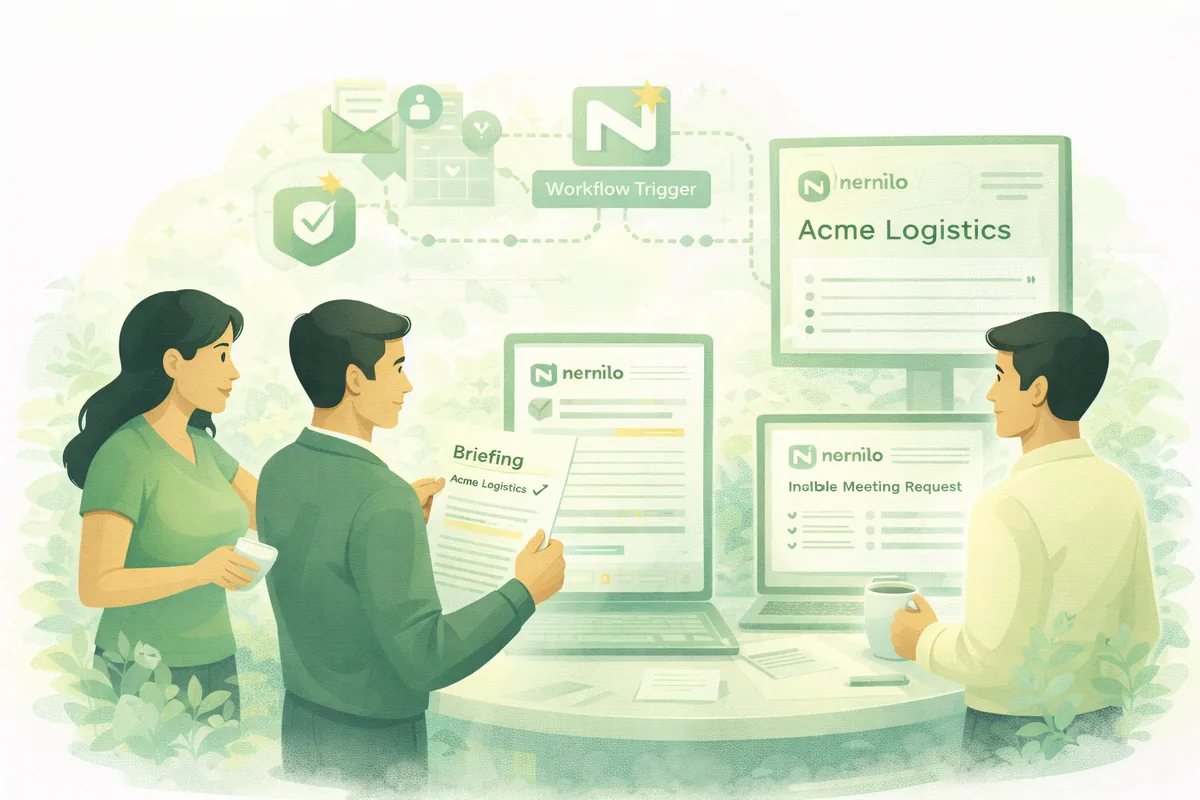
We rebuilt the process as a managed workflow using data pipelines, backend logic, a front-end, and instant notifications to decision makers. The workflow continuously surfaces which upgrades are available, at what price, and for which customers - removing manual lookups entirely. Approval requests are routed automatically with all relevant context in a single overview, reducing approvals to a single click. Every decision is logged, and a Power BI dashboard gives operations a live view of what's in flight.
Process time reduced by 80%. Every upgrade decision now flows through the same structured channel - fully logged, consistently applied, and available as clean data for yield and profitability analysis. And critically - the approved channel became fast enough that using it was no longer the harder option.
What this looks like in practice
The core problem in most contract upgrade workflows isn't technical - it's that the process asks people to do more work than the alternative, so they don't do it. The first step is always understanding where the friction actually lives: is it in finding the right information, getting the right people to approve, generating the right output, or tracking what happened?
Once that's mapped, the build is usually straightforward: a pipeline that keeps availability and pricing current, approval routing with context pre-assembled, outputs generated from system data rather than assembled by hand, and a dashboard that replaces the status-update email chain. The goal is to make the governed process the path of least resistance - not just the correct one.